
For years, the way we documented physical spaces was limited to photographs, videos, technical blueprints, and, more recently, 360° tours. Although these solutions brought significant advances, they still had a fundamental limitation: they showed the space, but did not truly allow us to explore or understand it in depth.
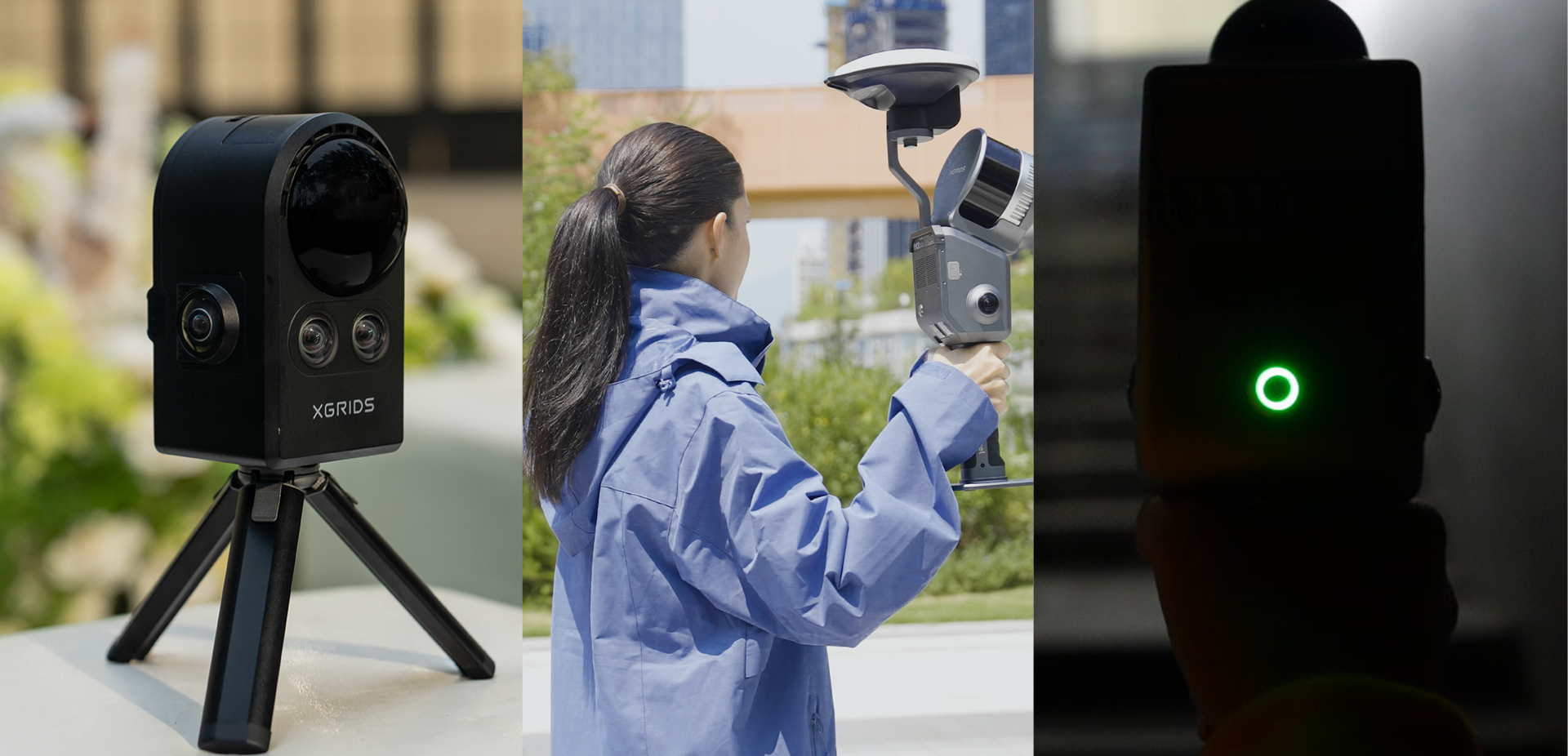
With XGRIDS’ PortalCam, we’ve entered a new era in which real spaces can be digitized into immersive, navigable, and highly realistic three-dimensional models. Instead of merely viewing an environment, we can now explore it freely, perceiving scale, depth, materials, light, and spatial context in a way that’s much closer to the real-world experience.
One technology, multiple industries
The technology’s applicability is cross-sectoral: any industry that needs to understand, document, present, or plan a physical space can benefit from a realistic, navigable 3D representation.
Among the areas with the greatest potential for application are:
Real Estate
PortalCam allows you to create experiences that are more interactive than photographs or 360° tours, offering greater spatial awareness. Users can explore a property on their own, understand the layout, and assess the atmosphere before an in-person visit.
Architecture, Engineering, and Construction (AEC)
In construction and engineering, spatial capture serves as a tool for documentation and monitoring. Digitizing spaces allows for the creation of “as-built” records, tracking construction progress, comparing the actual state to the planned design, and improving communication among teams.
Tourism and Hospitality
Hotels, museums, and tourist destinations can showcase their spaces through immersive 3D models, increasing transparency and trust before booking. Users can explore environments with greater realism and detail.
Retail, Showrooms, and Brand Experiences
In retail, PortalCam enables the creation of navigable virtual stores and showrooms. Instead of presenting products in isolation, brands can contextualize them within real environments, creating more engaging and distinctive experiences.
Education and Training
Physical spaces can be transformed into immersive learning environments. Institutions and companies can create simulations of laboratories, factories, or operational scenarios, facilitating remote teaching and training.
Heritage, Culture, and Events
Technology makes it possible to digitally preserve and share historic sites, exhibitions, installations, and temporary events. These environments can be revisited in the future, while retaining their cultural and documentary value.
The Unexpected Impact on Audiovisual Production
Despite PortalCam’s countless applications across different industries, audiovisual production stands out as one of the contexts where its potential is revealed in a particularly innovative way. By transforming real spaces into navigable digital environments, this technology allows us to rethink how projects are planned and executed.
A filming location is no longer just a visual reference but becomes a digital asset. It can be analyzed, shared, and used throughout the entire creative process, from pre-production to post-production.
More Efficient and Smart Audiovisual Production
Scanning spaces with PortalCam profoundly transforms the way audiovisual projects are planned and executed. From the earliest stages, it becomes possible to conduct remote location scouting, explore environments in detail, plan shots, and study camera movements without the need for constant travel. This process accelerates pre-production and fosters greater collaboration among teams, who can now work from a clearer and more precise shared visual foundation.
At the same time, directors and cinematographers gain a new level of creative control. The ability to freely navigate spaces before filming allows them to test ideas, anticipate technical challenges, and make more informed decisions—especially in complex productions or those with geographically dispersed teams.
These captured environments can also be integrated into virtual production workflows, serving as the basis for digital sets, previsualizations, or hybrid content. In this way, the physical world directly feeds into the digital realm, ensuring greater visual consistency and efficiency throughout the entire creative process.
Each space is no longer just a location but becomes a reusable digital asset. It can be used at different stages of the project—from client presentations to post-production—creating a seamless flow between reality and digital creation and opening up new possibilities for scalability and reuse.
Efficiency, sustainability, and versatility in audiovisual production
The ability to reuse captured environments transforms the way projects are conceived and executed. By reducing travel, logistics costs, and the need to rebuild sets, production becomes not only more efficient but also more sustainable and scalable.
More than just a 3D capture tool, PortalCam stands out for its versatility. Each space is no longer just a physical location but becomes a digital resource that can be used in different phases and contexts, from creative planning to technical execution.
This ability to transform real environments into reusable digital assets opens up new possibilities for creative and technical teams, allowing them to optimize processes, reduce waste, and explore new approaches to audiovisual production.
PortalCam not only improves the way spaces are captured, but also redefines how they are used. In audiovisual production, this translates into more visual processes, more informed decisions, and greater integration between the physical and digital worlds.
The future of production is not just visual, it is spatial, interactive, and navigable.