



Purchasing a Cargo Drone
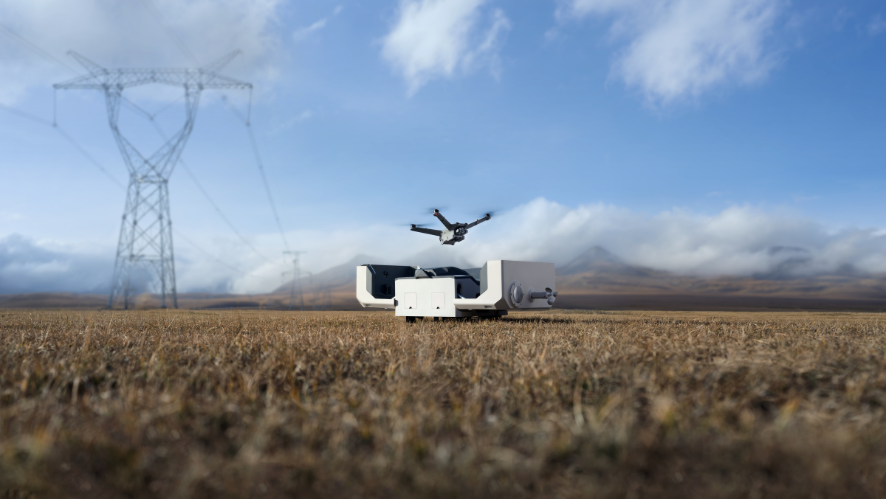
Cargo drones are opening up new possibilities for transporting materials to hard-to-reach locations, for urgent operations, and along complex logistics routes.
But the ability to carry a certain payload does not, in and of itself, mean that a drone is the right solution.
Here are the 7 questions you should ask before investing in a cargo drone.
1. What problem are you trying to solve?
Start with the operation, not the drone.
A cargo drone can make sense when ground transportation is too slow, complex, or risky. For example, when you need to reach remote areas, traverse difficult terrain, or transport materials to locations where you would otherwise need to mobilize people, vehicles, or other equipment.
It can also be a solution when delivery time has a direct impact on the operation.
Ask:
- How long does each transport currently take?
- How many people and resources are needed?
- Are there risks associated with the route?
- How much does it cost to have a team or operation idle while waiting for supplies?
The goal should be to identify a specific logistical constraint that can be alleviated through air transport.
2. What kinds of payloads do you need to transport?
Weight is only part of the equation.
Before selecting a drone, you should understand the characteristics of the payloads involved in the operation:
- Weight;
- Dimensions;
- Shape;
- Fragility;
- Center of gravity;
- Packaging requirements.
- It is equally important to consider all accessories used in transport, as these also contribute to the total weight.
A compact, stable payload does not present the same challenges as a bulky or suspended payload, even if both weigh exactly the same.
First, define the payload. Then choose the appropriate platform.
3. How often will missions be carried out?
How many deliveries will be needed per day, week, or month?
This question is essential for evaluating the operational return on investment.
A cargo drone tends to generate more value when there is a recurring and predictable need: similar routes, relatively stable cargo, and repeatable procedures.
The more standardized the mission, the easier it will be to optimize time, resources, and procedures.
4. What is the route where the drone will operate like?
A short distance on the map can represent a demanding operation on the ground.
Before assessing range or payload capacity, analyze the actual route:
- Distance;
- Elevation changes;
- Altitude;
- Obstacles;
- Buildings and infrastructure;
- Power lines;
- Vegetation;
- Presence of people;
- Weather conditions;
- Communication coverage;
- Possible alternative landing sites.
These factors influence the safety of the operation and the performance of the equipment.
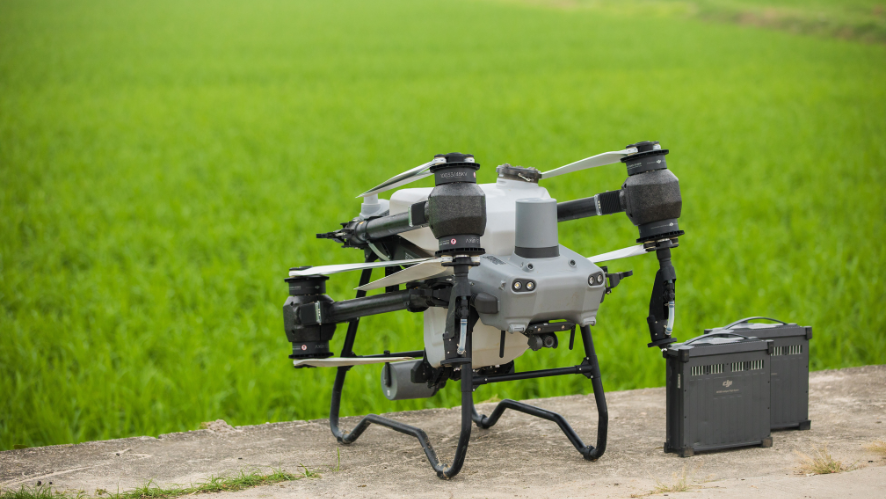
In the case of the DJI FlyCart 100, for example, payload capacity decreases as takeoff altitude increases. Similarly, the maximum range values advertised by the manufacturer are achieved under specific conditions and should not be interpreted as guaranteed performance for any mission.
The choice should therefore be based on actual operating conditions and not solely on the maximum specifications listed in the technical data sheet.
5. How will the delivery be carried out?
Transporting the cargo to its destination is only part of the mission. It is necessary to determine how that cargo will actually be delivered.
- Can the drone land at the destination?
- Is there sufficient space and a controlled area?
- Will the cargo need to be lowered using a lifting system or winch?
- Is there a team ready to receive it?
The chosen method influences the necessary equipment, procedures, and the risk assessment itself.
Safe zones for takeoff, approach, and delivery must also be defined, ensuring that bystanders remain clear of the operation.
Obstacle detection and avoidance technologies can contribute to safety, but they do not replace proper planning or the operator’s responsibility.
6. What legal and operational requirements apply?
In Europe, certain mission characteristics may mean the operation falls under the “specific” category, including, depending on the operation, BVLOS flights, aircraft with an MTOM exceeding 25 kg, or operations involving the dropping of material.
In these cases, an operational authorization from the national aviation authority or another applicable regulatory framework may be required.
Therefore, the following should be assessed in advance:
- Regulatory framework;
- Required authorizations;
- Operator qualifications and training;
- Risk assessment;
- Operational procedures;
- Insurance;
- Operational zones.
Regulatory feasibility must be analyzed before the purchase, not after.
7. What will be the actual cost of each mission?
The price of the drone does not represent the total cost of the operation.
To properly evaluate the investment, consider:
- Equipment and accessories;
- Batteries and power;
- Training;
- Operators;
- Permits;
- Insurance;
- Maintenance;
- Equipment transport;
- Preparation of operational areas;
- Time required for each mission;
- Procedures and contingencies.
Then, compare this figure with the current process.
How much does it cost today to transport the same cargo? How long does it take? How many people are needed? What other equipment must be mobilized? What is the financial impact of a potential operational shutdown?
In certain scenarios, the main benefit of a cargo drone lies not in the cost per kilogram transported, but in the time, resources, and risk it helps reduce.
When does it make sense to move forward?
If, after asking these seven questions, you identify:
- A clear logistical need;
- A suitable cargo;
- Recurring missions;
- An operationally viable route;
- A feasible regulatory framework, then there is a solid foundation for evaluating the implementation of a cargo drone.
At HPDRONES, we analyze the operational scenario, mission requirements, and the most appropriate technological solution before implementation.
Are you evaluating the use of cargo drones in your operation? Talk to our team and schedule a demonstration.